



the scorch trials
ISBN : 9781909489417
Author : James Dashner
(0 Reviews)
In stock
Estimate Shipping Time:
Sold By:
Inhouse product
Inhouse product
Price:
EGP320.000
Share:
Vista Ecommerce
(0 customer reviews)
Top Selling Products
-

As Long As the Lemon Trees Grow
EGP385.000 -
Pinocchio (Campbell First Stories)
EGP290.000 -
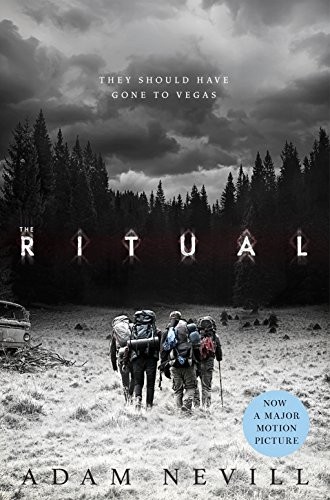
The Ritual
EGP480.000 -
Before the Coffee Gets Cold
EGP480.000 -
The Psalm Killer
EGP480.000 -
هوامش المقريزي حكايات من مصر
EGP180.000



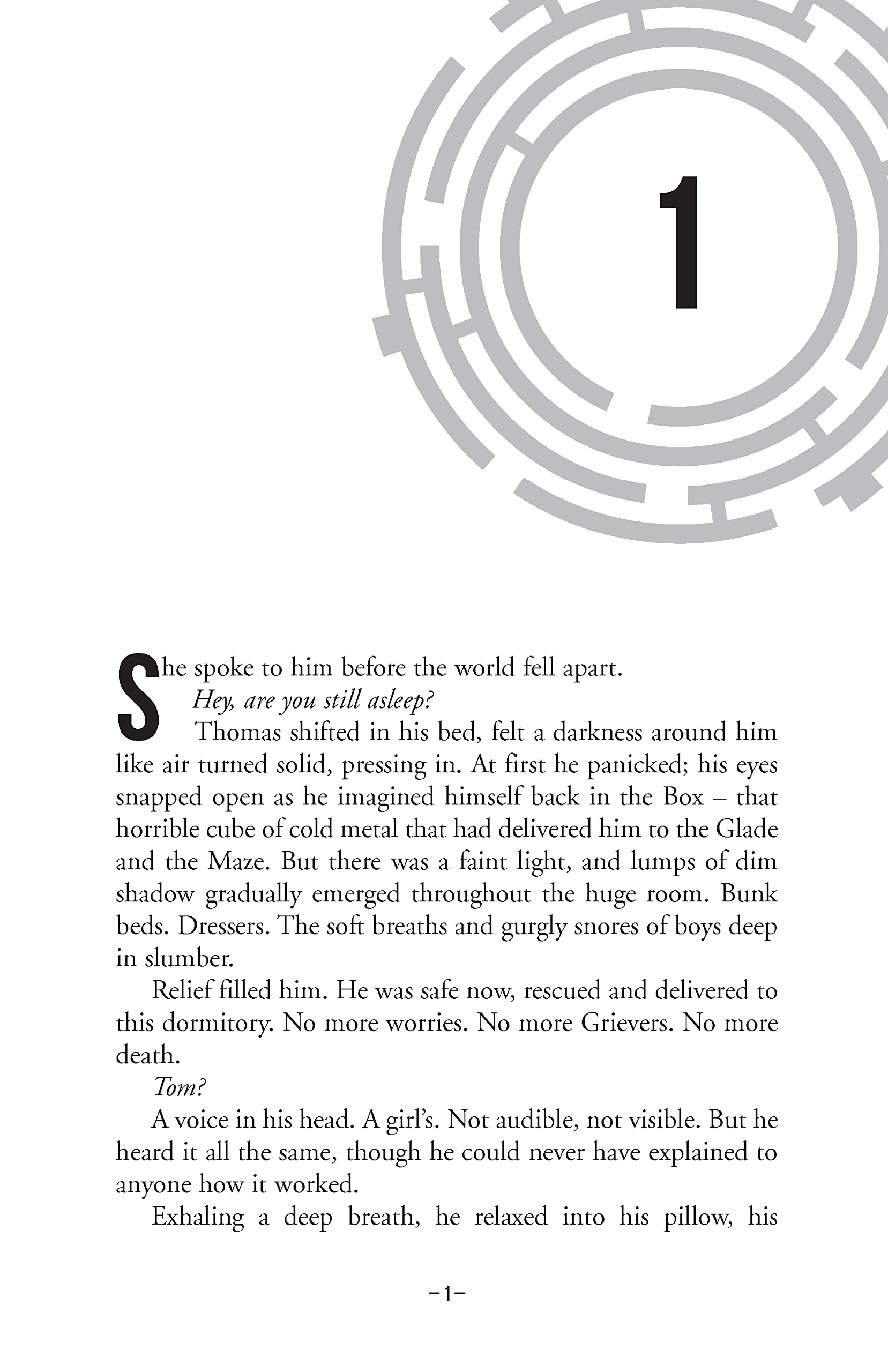
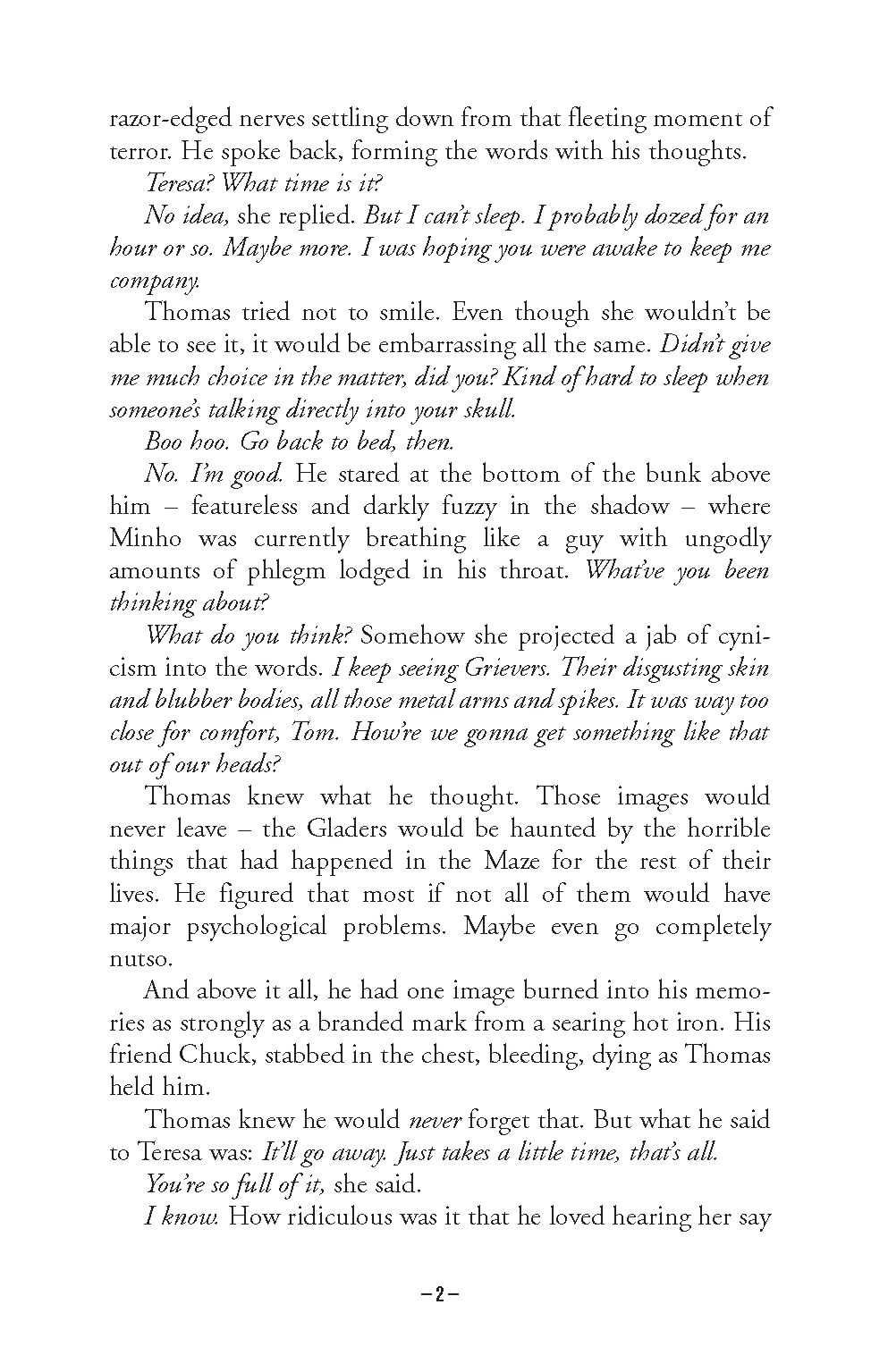
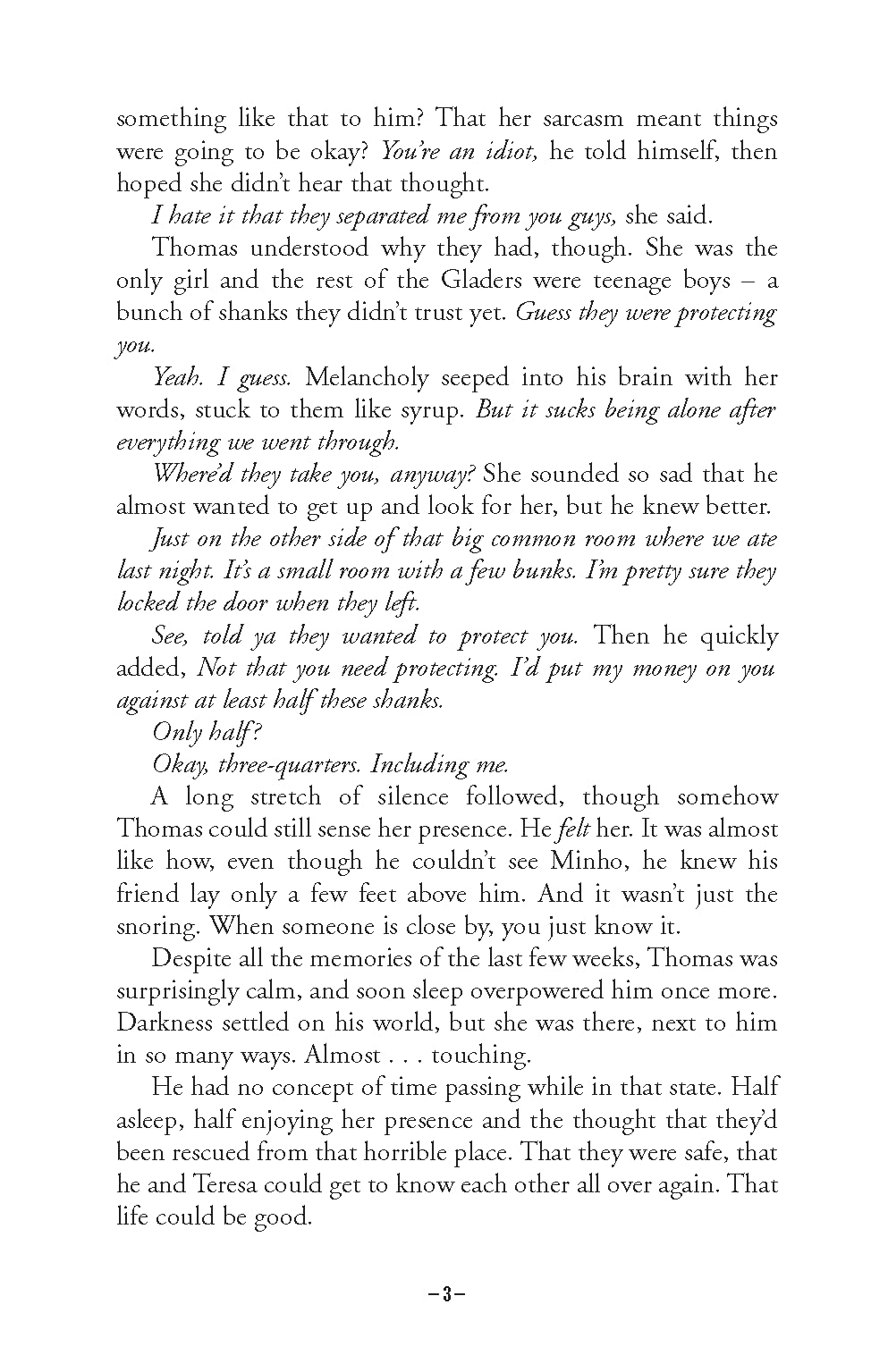
There was a time when it wasn't at all unusual for an author to publish a single, unified work one volume at a time over a span of several years. Tolkien, for instance, never considered "The Lord of the Rings" to be a trilogy; it was a novel that happened to be published, for economic reasons, in three installments. A number of notable nonfiction works, such as "The Decline and Fall of the Roman Empire," "The Golden Bough," and "The Gulag Archipelago," are available today only in abridged form or in multi-volume sets. Except for reference books and graphic novels, however, multi-volume single works aren't often published anymore - at least, not as such. If the success of James Dashner's "Maze Runner" series is any indication, however, the format just might be due for a comeback. "The Maze Runner," "The Scorch Trials," and "The Death Cure" have been described as a trilogy, and Dashner himself seems to regard them (and their prequels, "The Kill Order" and, coming next year, "The Fever Code") as distinct works. If ever a trilogy seemed to demand omnibus publication, however, it's this one: the individual volumes read less like self-contained stories than sections of a larger work. "Second-book syndrome" is a phenomenon well-known among fans of young-adult literature, but trilogy-openers such as "Divergent" and "The Hunger Games" usually stand perfectly well on their own. Their narrative unity leaves the reader with a sense of resolution, and although enough tensions and loose plot threads remain to carry over into a sequel, these novels would still be understandable, and enjoyable, without one. Not so "The Maze Runner," which manages to solve almost none of the reader's burning questions before ending with a cliffhanger. "The Scorch Trials" is even less effective as a standalone novel: any reader who picks it up without having read "The Maze Runner" will be profoundly confused, and the ending offers even less resolution than that of its predecessor. (Dashner may have made it clear at the end of "The Maze Runner" that his characters had made it out of the frying pan only to land in the fire, but the characters themselves got to settle down in comfort for a good night's sleep.) Not having read "The Death Cure" (yet), I feel more than a little awkward writing a review of "The Scorch Trials," and vaguely dishonest, as if I were reviewing a book before finishing it. As long as it presents itself as part of a trilogy, however, I'll review it that way, but a lot of what I have to say is provisional and conditional."The Scorch Trials" is an exciting read, full of twists, narrow escapes, shifting loyalties, double-crosses, and genuine surprises. Most of the questions raised by "The Maze Runner" are still unanswered by the end of its sequel, but Dashner doles out clues just often enough to keep the reader intrigued and hungry for more as his world's secrets, originally a great blur, grow ever so much clearer and clearer while remaining always tantalizingly out of focus. First in the Maze, and now in the sun-baked wasteland known as the Scorch, the protagonist Thomas and his friends are subjected to a series of cruel, sometimes deadly, situations, all as part of some kind of experiment they're assured is essential to the survival of the human race. It's a far-fetched premise, and ultimately whether "The Maze Runner" and "The Scorch Trials" are worth reading hinges upon whether Dashner can pull it all together in "The Death Cure" in a way that makes sense. If he can convince us that these brutal trials really are supplying data, procurable no other way, that will save humanity, these action-packed adventures may pay off splendidly in a thoughtful conclusion exploring the ethics of sacrificing a few for the greater good of the many. If not, if there's nothing remotely resembling a logical reason for a team of researchers (known by the ridiculously contrived acronym WICKED) to put dozens of adolescents through every kind of physical, mental, and emotional hell they can devise - well, a couple of one-star reviews here on Amazon have described "The Scorch Trials" as little more than middle-grade literary torture porn, and although I'd still say that was a bit of an exaggeration, and certainly not Dashner's intent, it wouldn't be *too* far off the mark.This isn't particularly good literature. Dashner writes a rather flat prose, peppered with occasional odd similes. (A shelter is built of "wood dry as rotted bone." Rot *requires* moisture.) I assume the frequent use of sentence fragments was a deliberate stylistic choice, meant to enhance the tone of choppy and haphazard urgency, but it's overdone, especially in a book directed to young readers who (trust me, I come from a family of teachers and I know how middle-graders write) need to learn how to follow the conventions before they can understand why sometimes it's useful to defy them. The characters are cardboard, and the protagonist Thomas, although he's repeatedly singled out as special and important by the people around him, is even less developed as a character than some of his (supposedly less essential) friends and companions. (Some reviewers have implied that Dashner chose to have his characters' memories wiped prior to the events of the first novel solely so he wouldn't have to go to the trouble of depicting them as complex individuals. That's an unfair assessment, as there's clearly a reason the plot requires Thomas and his companions to be ignorant of their own backstories, but the fact remains that it takes more than the usual amount of attention to character development to make an amnesiac into a compelling character, and Dashner doesn't even make the effort.) Knowing that Thomas's perceptions and experiences are to some significant extent manipulated by WICKED may add to the mystery of Dashner's fictional world, but his questionable agency makes Thomas himself even less interesting and relatable. (Dashner's grasp of science is pretty shaky, too. He really doesn't seem to understand how lightning works - more than once Thomas actually watches a lightning bolt come down out of the sky and hit the ground - and as a person who lives in a part of the world with a climate rather like that of Dashner's "Scorch," I had to laugh when Dashner had his characters running through the wasteland for several hours without stopping, starting well before sunset, carrying packs of provisions but only a few flimsy plastic bags of water.)Basically, "The Scorch Trials" (and the series as a whole) is the literary equivalent of a "Legend of Zelda"-type video game: there's a story, and it's a pretty interesting one, but it's mostly there as a frame for the fun of progressing through a series of ever-more-challenging landscapes and dungeons, collecting treasures and slaying colorful monsters. (I'm not at all surprised that Dashner's latest trilogy, the Mortality Doctrine series, is set in a futuristic world of virtual-reality gaming.) Dashner has served up an energetic read: relentless action, fairly graphic (though rarely gruesome, and almost never gory) violence, super-short chapters that almost always seem to end with another cliffhanger. For all its faults, this just may be the perfect book to persuade the middle-grade reluctant reader to set down his game controls for awhile.I didn't enjoy "The Scorch Trials" so much as I did "The Maze Runner"; my favorite parts of "The Maze Runner" dealt with how a group of teenage boys maintained a civil and functioning society under bizarre and adverse circumstances, while "The Scorch Trials" is much more a straightforward action-adventure. Still, it was good enough - and I'm sufficiently intrigued by the enigmas of Dashner's plot - to keep me turning the pages and coming back for more. Whether it was time well spent, however, remains to be seen when I get my hands on "The Death Cure."
There have been no reviews for this product yet.
Related products

EGP480.000
Dark Matter
EGP580.000
Before Your Memory Fades
EGP480.000
Luster
EGP445.000
The Fellowship of the Ring

EGP430.000
What Lies Beyond the Veil
EGP430.000
Restore Me
EGP430.000
Unravel Me
EGP430.000
The Atlas Six (Atlas series, 1)

EGP159.500
Monster Hunter

EGP165.000
The Boy Who Was It

We are offering a great experience and connecting readers with a variety of original unique collection of books.
Contact Info
- Address: Arkan Plaza, Zayed, 6th of October, Egypt
- Phone: +201221729092
- Email: Support@readerscorner.co
